Repsher Physical Therapy Fall 2026 Newsletter
Your Movement. Your Health. Our Mission.
Volume 2, Issue 1

🍁 In This Issue 🍁
🎃 Therapist Spotlight: Tony John, PT
As Tony prepares to retire this December after more than 36 years as a physical therapist, we’re celebrating his career, his history with Repsher, and the impact he has made on his patients.
🎃 Preventing Fall Yard-Work Injuries
Learn simple ways to protect your back, shoulders, and knees while tackling raking, lifting, and other fall cleanup.
🎃 Why Strength Training Matters More as We Age
Discover how regular strength training can help preserve muscle, improve balance, support joint and bone health, and maintain independence as we age.
🎃 Fall Into Fitness: Staying Active as the Weather Changes
Find practical ways to keep moving and maintain a consistent exercise routine as temperatures drop and the days get shorter.
🎃 Balance & Fall Prevention: Are You as Steady as You Think?
Learn how changes in balance can affect your safety and how physical therapy can help you stay steady, confident, and active.
🎃 What’s New at Repsher PT This Fall
See what’s new around the clinic as we continue to enhance the experience and care we provide for our patients.

Therapist Spotlight: Tony John, PT
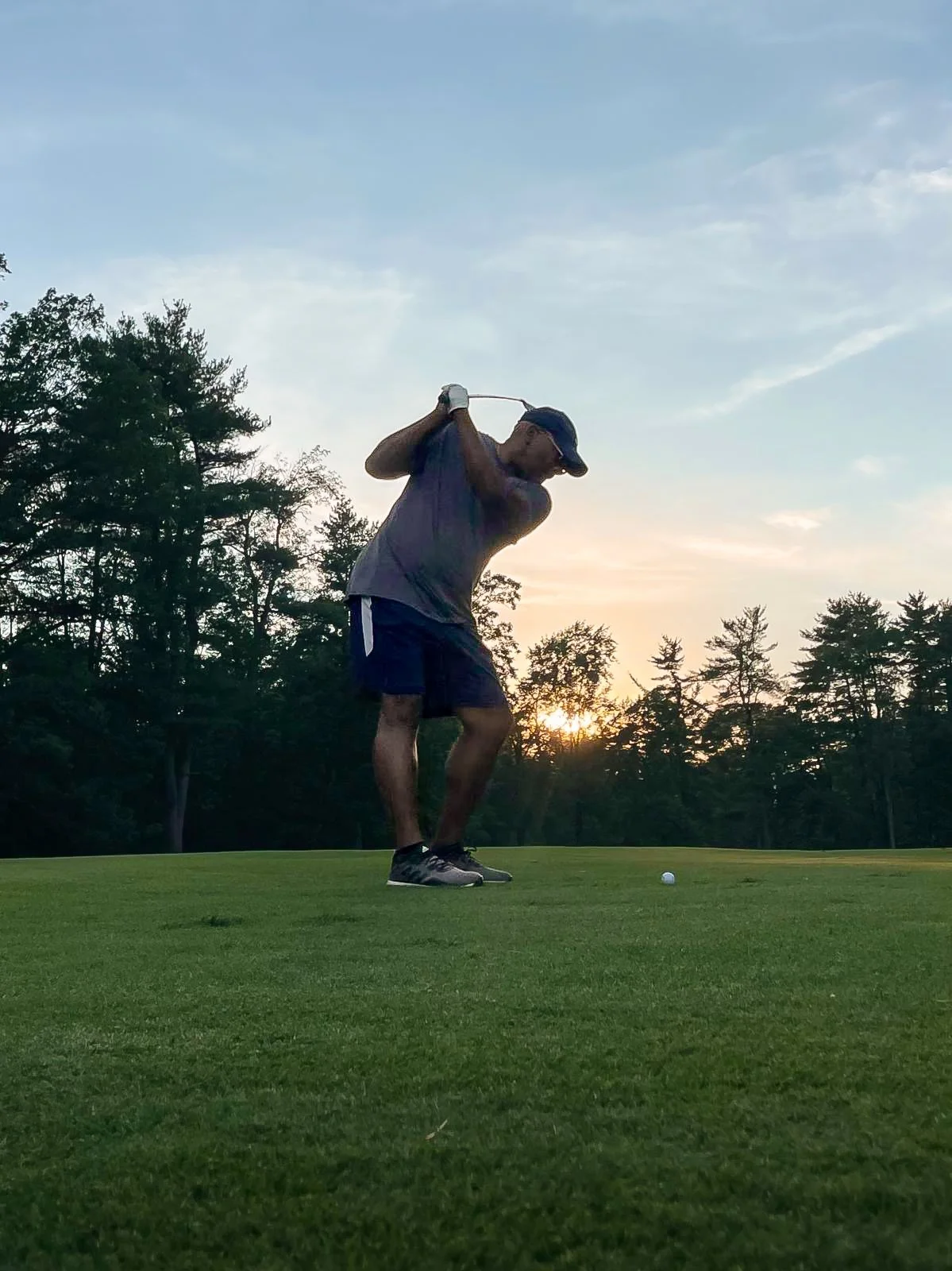
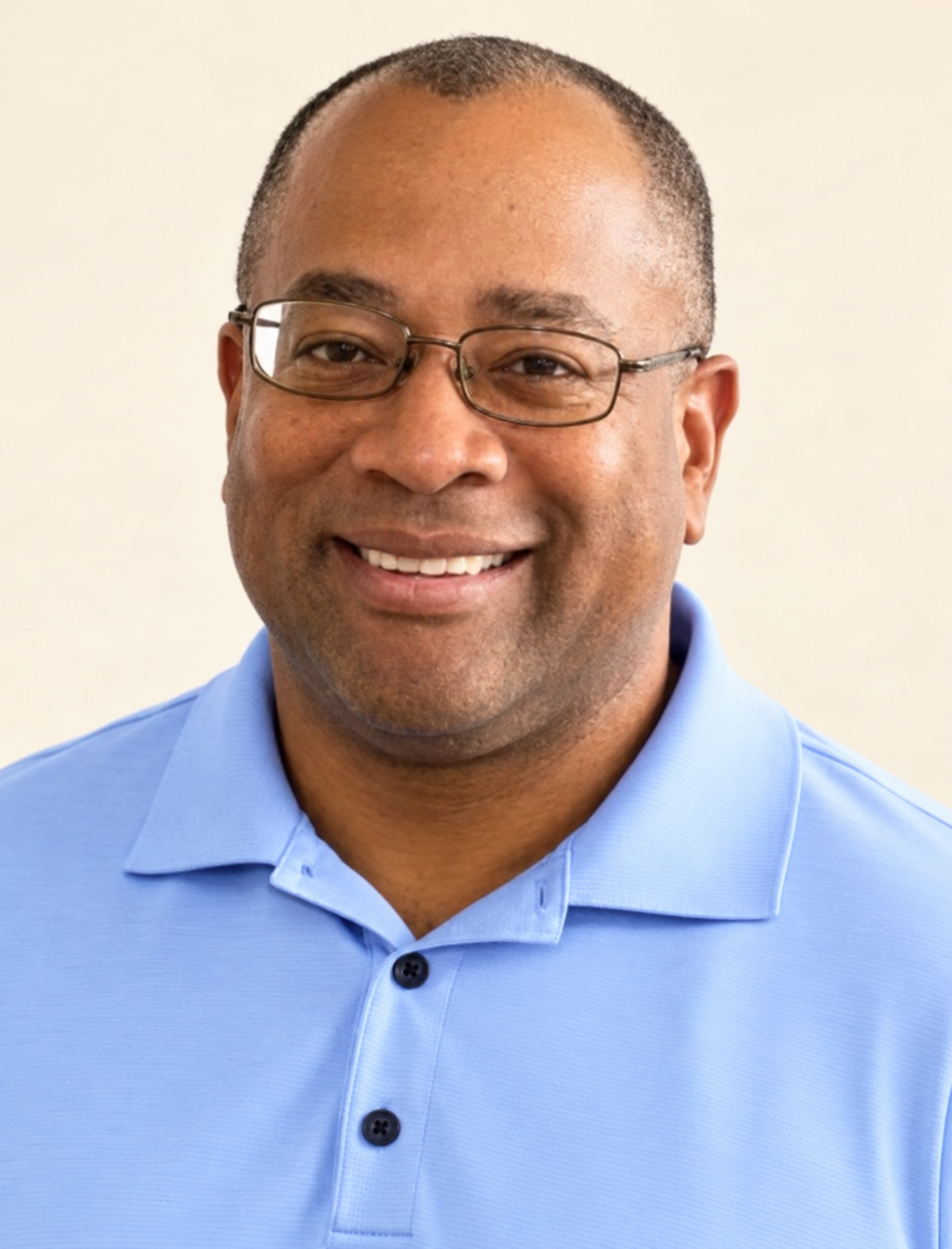
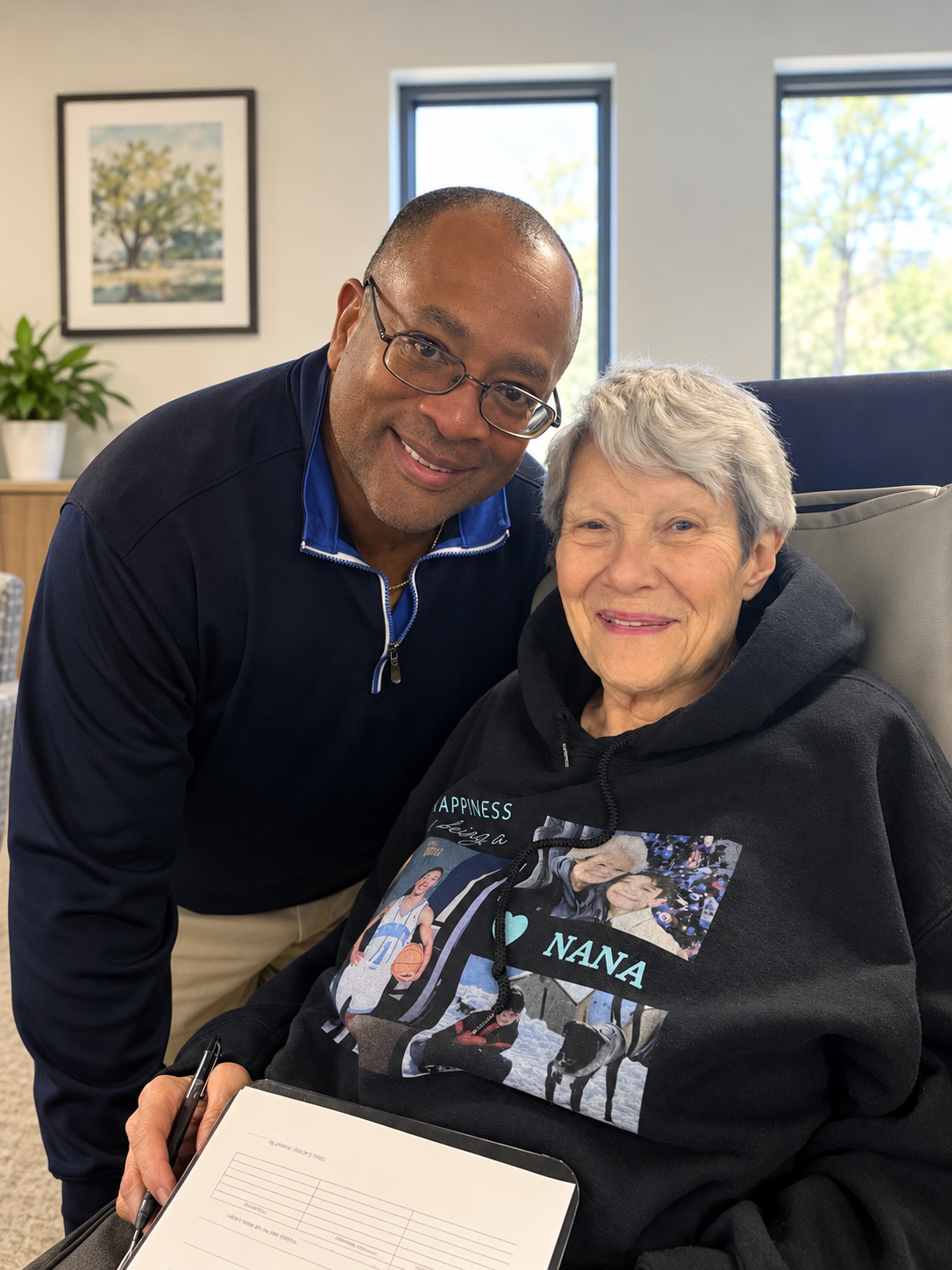
This fall, our Therapist Spotlight is especially meaningful as we recognize Tony John, PT, who will be retiring on December 18, 2026, after a remarkable career in physical therapy and many years as part of the Repsher Physical Therapy family.
Tony proudly hails from St. Vincent and the Grenadines, a beautiful island nation in the southern Caribbean. He went on to pursue a career in physical therapy, earning his Master of Science in Physical Therapy from Long Island University in June 1990. That same year, Tony began his professional career at Repsher, where he worked from 1990 through 1995.
In 1995, Tony transitioned into home care, spending more than two decades working with Seton Home Care and Albany Visiting Nurses. During those years, he brought physical therapy directly into patients’ homes, helping individuals regain mobility, independence, and confidence while navigating a wide variety of physical challenges.
Fortunately for us, Tony's story with Repsher wasn't finished. In 2018, he returned to the practice, where he has remained an important part of our clinical team ever since.
Throughout a career spanning more than 36 years, Tony has remained committed to what drew him to physical therapy in the first place: working directly with patients. Although he had opportunities to move into administrative positions during his career, Tony consistently chose to remain a practicing clinician. For him, the challenge of identifying what each patient needs and the gratification of helping that person achieve his or her goals have always been the most rewarding parts of the profession.
That dedication to patient care is also what Tony says he will miss most when he retires. Physical therapy has given him the opportunity to work with countless people at different stages of life, each with their own challenges and goals. Helping someone move better, become more independent, return to an activity they enjoy, or simply improve their quality of life has provided a sense of purpose and satisfaction throughout his career.
After more than three decades of caring for others, Tony is looking forward to having a little more time for himself and the people closest to him. Outside the clinic, he enjoys spending time with family and friends, traveling, playing golf, reading, and exercising—and retirement should provide plenty of opportunities for more of all five.
Tony's retirement will mark the end of an impressive chapter, both for him and for Repsher Physical Therapy. From beginning his career here in 1990 to returning in 2018 and ultimately finishing his career where it started, Tony has a unique connection to the history of our practice.
We are grateful for the years Tony has spent caring for our patients and being part of the Repsher team. As December approaches, we look forward to celebrating his career and wishing him a well-deserved retirement filled with family, friends, travel, golf, good books, exercise—and hopefully a little relaxation, too.
Congratulations, Tony, on an outstanding career and your upcoming retirement!
Preventing Fall Yard-Work Injuries
Fall in the Northeast means cooler temperatures, changing leaves—and plenty of yard work. Raking, bagging leaves, trimming shrubs, cleaning gutters, and moving outdoor furniture may not feel like “exercise,” but these activities can place significant demands on your muscles and joints, particularly if you try to get everything done in one weekend.
Yard Work Is More Physical Than You Think
Yard work combines many of the movements that can contribute to musculoskeletal injuries: repetitive bending, lifting, twisting, reaching, pushing, and pulling. Add several hours of activity that your body may not be accustomed to, and it is easy to see why your back, shoulders, knees, or elbows might be sore afterward.
The numbers also show that yard work is not always as harmless as it seems. According to the U.S. Consumer Product Safety Commission, more than 35,000 injuries associated with hand garden tools were treated in U.S. emergency departments in 2023, with adults age 65 and older having the highest injury rate of any adult age group.¹
Research involving lawn equipment tells a similar story. A national study of lawn mower injuries estimated an average of nearly 85,000 emergency-department-treated injuries per year from 2005–2015. Although cuts were the most common injury, sprains and strains accounted for nearly 19% of injuries.²
Your Back Deserves Some Attention
Lifting bags of leaves, moving planters, carrying equipment, and repeatedly bending toward the ground can be particularly demanding on the lower back.
Research supports the relationship between greater lifting demands and low-back pain. In a prospective study that followed workers for up to 4½ years, researchers found that increasing physical exposure from lifting was associated with an increased risk of developing low-back pain.³
That doesn't mean you need to avoid lifting. Instead, manage the load. Keep heavier objects close to your body, use your legs and hips when lifting, and avoid combining a heavy lift with excessive twisting. When possible, divide one heavy load into several smaller ones.
Don't Try to Win Fall Cleanup in One Day
One of the simplest ways to prevent an overuse injury is to spread the work out. Your body responds much better to a reasonable amount of activity followed by recovery than to suddenly performing several hours of strenuous work when you aren't accustomed to it.
Think of yard work the same way you would exercise: warm up, pace yourself, use good technique, and gradually increase the workload. A short walk and a few minutes of movement before starting can help get your body ready for the task ahead.
Rake Smarter, Not Longer
Raking can involve hundreds of repetitions of essentially the same movement. Try switching which hand is higher on the rake periodically and change the direction you are working. This distributes the workload instead of repeatedly stressing the same muscles for an hour or more.
Most importantly, take breaks before you feel like you need one. Ten or fifteen minutes of yard work followed by a short change in activity can be much easier on your body than working continuously until something starts hurting.
Be Careful With More Than Just Your Back
Fall cleanup often involves power equipment, ladders, and cutting tools in addition to rakes and leaf bags. One national study estimated approximately 648,000 emergency-department visits related to trimming and pruning activities from 1990–2007, and nearly 99% of those injuries occurred around the home.⁴
Use the right tool for the job, wear appropriate footwear, avoid working on wet or unstable surfaces, and don't take unnecessary risks on ladders just to finish the job a little faster.

When an Ache Becomes Something More
Some muscle soreness after an active weekend can be normal, especially if you haven't performed those activities recently. However, pain that is severe, persists, worsens, limits your normal activities, or is accompanied by numbness, tingling, or weakness deserves attention.
If a fall weekend in the yard leaves you moving a little less comfortably than you'd like, physical therapy can help identify what's causing the problem, restore your mobility and strength, and get you back to the activities you enjoy.

Why Strength Training Matters More as We Age
We often think of strength training as something for athletes or people trying to build muscle, but its importance actually increases as we get older. Maintaining strength helps us continue doing the things that matter most—climbing stairs, carrying groceries, getting up from a chair, traveling, playing with grandchildren, enjoying recreational activities, and simply remaining independent.
Strength Is About More Than Muscle
As we age, gradual changes in muscle mass and strength can make everyday activities more difficult. The good news is that our muscles remain remarkably responsive to exercise throughout life.
A 2025 systematic review and analysis of 151 randomized trials involving more than 6,300 older adults found that resistance training improved physical function, muscle size, lean body mass, and strength. Interestingly, even relatively low amounts of resistance training produced meaningful improvements in physical function.
Stronger Muscles Make Everyday Life Easier
Strength gives your body a reserve for everyday activities. Think about getting out of a chair: when your legs are strong, the movement requires only a fraction of your available strength; as strength declines, that same task becomes much more demanding.
Research supports this connection. A 2024 systematic review and meta-analysis of resistance training in older adults found significant improvements in functional performance, including measures such as standing from a chair and the Timed Up and Go test.
The benefit isn't necessarily about lifting heavier weights—it's about making everyday life easier.
Yes, You Can Still Build Muscle
One of the biggest misconceptions about aging is that eventually it becomes "too late" to build muscle. Research says otherwise.
A 2024 systematic review examining resistance training in adults 65 years and older found significant increases in muscle size following resistance training. In other words, older muscles can still adapt and grow when they are appropriately challenged.
Whether you're 55, 65, 75, or beyond, there is still an opportunity to improve your strength.
Strength Supports Balance and Independence
Walking, climbing stairs, recovering from a stumble, getting up from the floor, and navigating uneven surfaces all require adequate lower-extremity strength. Maintaining that strength can help you remain active and confident in your daily life.
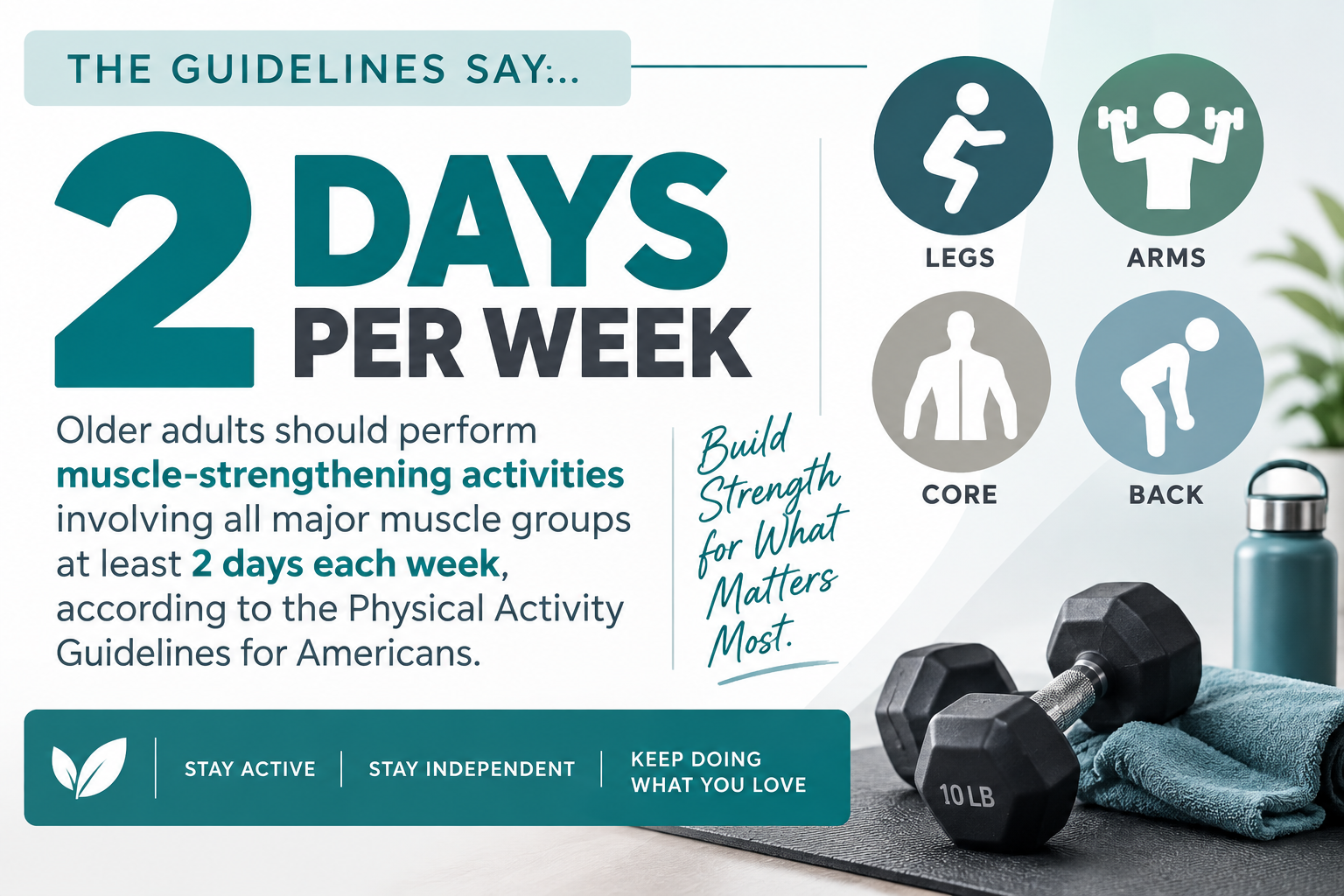
Strength training is considered so important for healthy aging that the Physical Activity Guidelines for Americans recommend muscle-strengthening activities involving all major muscle groups at least two days per week for older adults, in addition to aerobic and balance activities.
You Don't Have to Become a Weightlifter
Strength training doesn't necessarily mean lifting a barbell or spending hours in a gym. Resistance can come from free weights, machines, resistance bands, body-weight exercises, step-ups, squats, sit-to-stands, and many other functional movements.
The most important principle is progression. To become stronger, muscles need to be appropriately challenged. As your body adapts, the resistance, repetitions, or difficulty of an exercise can gradually increase.
Even a relatively small amount of well-designed strengthening can make a difference, particularly for someone who hasn't been regularly exercising.
It's Never Too Late to Get Stronger
Aging is unavoidable, but we shouldn't automatically accept weakness and loss of function as simply "part of getting older." Decades of research have demonstrated that older adults can improve strength, muscle mass, and physical function through appropriately prescribed resistance exercise.
If pain, weakness, balance problems, or a previous injury are keeping you from exercising, physical therapy can help identify an appropriate starting point and develop a strengthening program that progresses safely.
The goal isn't simply to get stronger in the gym—it's to build and maintain the strength you need for the life you want to live.


Balance & Fall Prevention: Are You as Steady as You Think?

Balance is something most of us rarely think about—until it starts to become a problem.
But balance can gradually change with age, and even subtle declines can affect confidence, mobility, and independence.

Falls Are More Common Than You Might Think
According to the Centers for Disease Control and Prevention (CDC), more than 1 in 4 adults age 65 and older reports falling each year. Falls are also the leading cause of injury among older adults, but an important point can sometimes get lost in those statistics: falls are not an inevitable part of aging.
Research has repeatedly shown that exercise can make a meaningful difference. A large Cochrane systematic review involving more than 23,000 older adults found that exercise programs reduced the rate of falls by approximately 23%, with programs emphasizing balance and functional exercises showing particularly strong benefits.
What Keeps You Balanced?
Good balance isn't controlled by just one part of your body. Your brain constantly combines information from several systems, including your:
Vision – tells you where you are in relation to your surroundings.
Vestibular system – your inner ear helps detect head movement and position.
Sensation and proprioception – provide information about where your feet and joints are without having to look at them.
Strength and coordination – allow your body to respond quickly when your balance is challenged.
A change in any one of these systems can make maintaining your balance more difficult.
Are You as Steady as You Think?
Balance problems aren't always obvious. You may notice yourself using the railing more often on stairs, reaching for furniture when walking, avoiding uneven ground, feeling less comfortable in the dark, or becoming more cautious with activities you used to perform without thinking.
Another important warning sign is simply becoming less active because you're worried about falling. Avoiding activity may feel safer initially, but over time it can contribute to further losses in strength, balance, and confidence.
Strength and Balance Go Hand in Hand
Good balance requires more than the ability to stand on one leg. Your legs and trunk need enough strength to control your body—and enough power to react quickly if you trip, slip, or lose your footing.
This is one reason strengthening and balance training are often most effective when performed together. Exercises can be progressively challenged by changing your base of support, surface, visual input, movement speed, or by adding another task.
The goal isn't simply to become better at a balance exercise. It's to improve your ability to respond safely when real life challenges your balance.
Balance Can Be Trained
Just like strength and endurance, balance is something that can improve with practice. The right exercises depend on the individual, which is why simply standing on one leg isn't necessarily the answer for everyone.
Physical therapists can evaluate strength, walking, mobility, vestibular function, and different components of balance to identify where a problem may be coming from. At Repsher Physical Therapy, we can also use tools such as our Biodex Balance System and Guldmann safety harness to assess and challenge balance in a controlled environment.
Don't Wait for a Fall
You don't need to fall before taking your balance seriously. If you've noticed changes in your walking, increasing reliance on handrails or furniture, difficulty on uneven surfaces, dizziness, or simply less confidence on your feet, it may be worth having your balance evaluated.
Staying steady isn't just about preventing falls—it's about maintaining the confidence and independence to keep doing the things you enjoy.
3 New Additions. One Goal: Better Rehab.
〰️
3 New Additions. One Goal: Better Rehab. 〰️
WHAT’S NEW AT REPSHER THIS FALL


GAME READY®
Arriving late September
Our new Game Ready system combines cold therapy with intermittent compression to help manage pain and swelling. It will give our therapists another recovery option following surgery, injury, or more demanding rehabilitation sessions.


SHOCKWAVE THERAPY
Coming Soon
We’re planning to add shockwave therapy, which uses acoustic pressure waves to stimulate tissue and support the healing process. It can be particularly useful for certain persistent tendon and musculoskeletal conditions, including plantar fasciitis, Achilles and patellar tendinopathy, and tennis elbow.

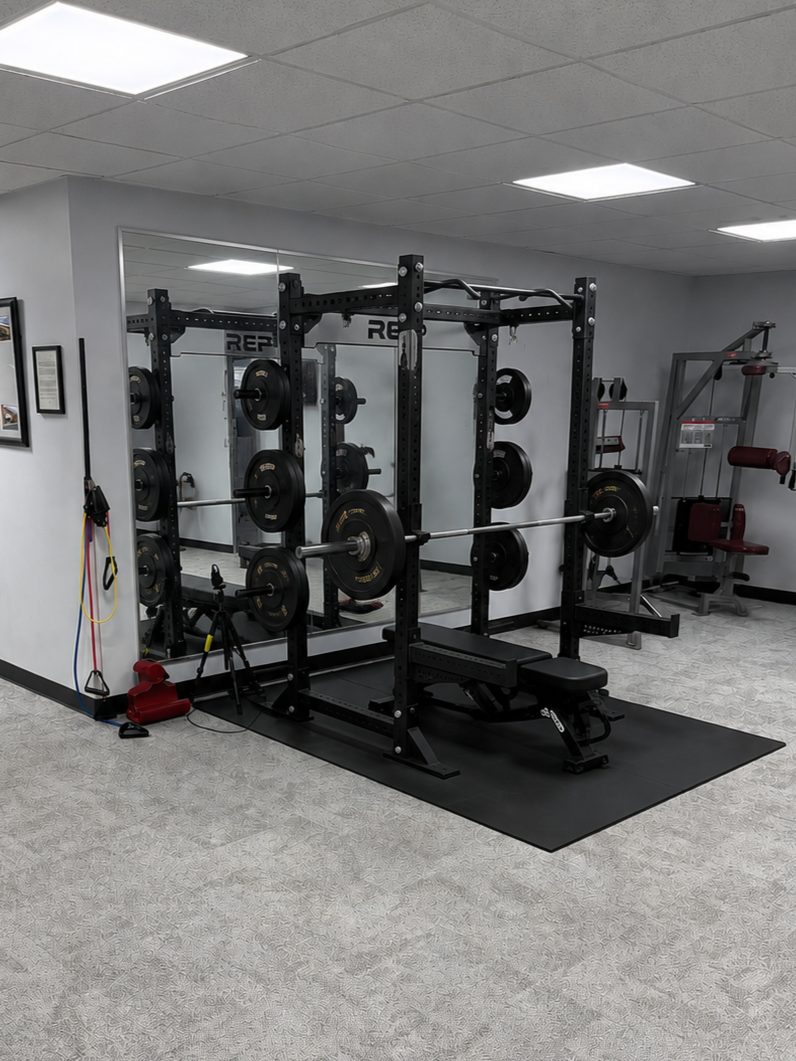
NEW SQUAT RACK
Coming This Fall
We’re replacing our AlterG treadmill with a dedicated squat rack and strength-training area. This will expand our ability to progressively load patients and incorporate more advanced strengthening and functional exercises as they move through rehabilitation.
RECOVER • STRENGTHEN • RETURN